
Learn Data Engineering
This comprehensive data engineering course from Educative provides essential skills for building scalable data systems and processing pipelines. The programme covers both structured and unstructured data handling, teaching industry-standard technologies including Hadoop for distributed storage, Apache Spark for large-scale processing, and Kafka for real-time data streaming. Students learn through interactive, browser-based lessons that require no local setup, making complex data engineering concepts accessible through hands-on practice. The self-paced format allows professionals to develop expertise in data architecture, ETL processes, and system design at their own speed. With a 4.6 rating and completion certificate, this course bridges the gap between theoretical knowledge and practical application in modern data engineering workflows.
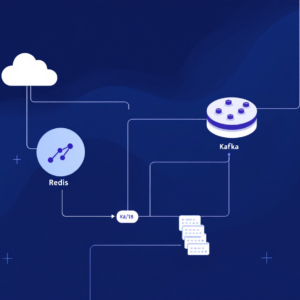
This course covers the essentials of data engineering, from handling structured and unstructured data to designing scalable systems with Hadoop, Spark, and Kafka.
Is Learn Data Engineering Worth It in 2026?
This course is worth your time if you’re transitioning into data engineering or want to solidify fundamentals in distributed systems and data pipelines. You’ll benefit most if you already have programming experience (Python or Java) and understand basic database concepts—this isn’t a gentle introduction to coding itself.
The honest caveat: Educative’s text-based, interactive format excels at teaching concepts and syntax, but real data engineering involves orchestration tools (Airflow, dbt), cloud platforms (AWS, GCP, Azure), and production debugging that this course covers theoretically rather than hands-on. You won’t emerge ready to own a data pipeline in production without supplementary project work.
The verdict is solid for foundational learning. Hadoop, Spark, and Kafka remain industry standards, and understanding their architecture—not just their APIs—is valuable. This course teaches the ‘why’ behind distributed computing, which transfers across tools. At AIU.ac, we position this as a strong entry point into data engineering before specialising in cloud platforms or specific orchestration frameworks.
What You’ll Learn
- Design and implement batch processing pipelines using Apache Spark, including RDD operations, DataFrames, and SQL queries
- Build real-time data streaming architectures with Apache Kafka, including producers, consumers, and topic partitioning strategies
- Optimise Hadoop distributed file system (HDFS) storage and MapReduce job performance for large-scale datasets
- Handle both structured data (SQL databases, Parquet) and unstructured data (logs, JSON, images) in unified pipelines
- Implement data quality checks and error handling in ETL workflows to ensure pipeline reliability
- Design scalable system architectures that balance latency, throughput, and cost trade-offs
- Write efficient code for distributed computing environments, understanding serialisation and data shuffling overhead
- Evaluate when to use batch processing versus stream processing for different business requirements
- Implement data partitioning and indexing strategies to optimise query performance at scale
- Debug and monitor data pipelines to identify bottlenecks and data integrity issues
What AIU.ac Found: What AIU.ac found: Educative’s interactive text-based lessons make complex concepts like MapReduce and Kafka partitioning genuinely digestible—you can read, code, and test in the same window without environment setup friction. However, the course treats cloud infrastructure (S3, GCS, data warehouses) as secondary, which reflects its focus on foundational distributed systems rather than modern cloud-first pipelines. This is a strength for learning principles, but a limitation if your goal is immediate cloud platform readiness.
Last verified: March 2026
Frequently Asked Questions
How long does Learn Data Engineering take?
The course is self-paced, but most learners complete it in 40–60 hours depending on prior experience and how deeply you explore the interactive exercises. Educative estimates vary, but budget 4–8 weeks at 5–10 hours per week for thorough learning.
Do I need Python or Java experience for Learn Data Engineering?
Yes, you should be comfortable with at least one programming language before starting. The course assumes you can read and write code; it teaches data engineering patterns, not programming fundamentals. Java or Python experience is ideal since both are used in Spark and Hadoop ecosystems.
Is Learn Data Engineering suitable for beginners?
Only if you’re a beginner in data engineering with existing programming skills. If you’ve never coded, start with a programming fundamentals course first. This course assumes you understand variables, loops, functions, and basic object-oriented concepts.
Will this course teach me cloud data platforms like Snowflake or BigQuery?
No. This course focuses on open-source distributed systems (Hadoop, Spark, Kafka) and foundational data engineering concepts. Cloud platforms are covered separately at AIU.ac; we recommend this course as prerequisite knowledge before specialising in cloud-native tools.
Can I use this course to prepare for data engineering job interviews?
Partially. You’ll understand system design and distributed computing principles that appear in interviews, but you’ll also need to practise coding problems, SQL optimisation, and real-world case studies. Pair this with interview-focused platforms for complete preparation.