
DevOps Continuous Integration and Delivery: Operational Strategies
CI/CD pipelines fail when operations teams don’t understand the strategy behind them. This course cuts through the noise to show you how continuous integration and delivery actually work at scale—covering the operational decisions that separate smooth deployments from firefighting marathons.
AIU.ac Verdict: Ideal for DevOps engineers, release managers, and infrastructure teams who need to move beyond tooling and understand the operational philosophy that makes CI/CD sustainable. The 2h 36m format is lean but may require prior exposure to basic DevOps concepts to maximise value.
What This Course Covers
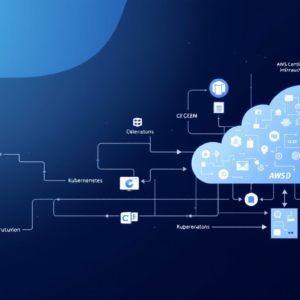
You’ll explore the operational architecture underpinning modern CI/CD systems: pipeline design patterns, deployment strategies (blue-green, canary, rolling), environment management, and the feedback loops that prevent broken code reaching production. Conran walks through real-world trade-offs—speed versus safety, automation scope, and when manual gates still matter.
The course emphasises strategy over syntax. You’ll learn how to structure CI/CD for different organisational maturity levels, handle rollback scenarios, manage secrets and compliance within pipelines, and design monitoring that catches issues before users do. Practical scenarios show how operational decisions cascade through your entire delivery chain.
Who Is This Course For?
Ideal for:
- DevOps Engineers: Consolidate your hands-on pipeline experience into a coherent operational framework; understand the ‘why’ behind architectural choices.
- Release Managers & Build Engineers: Learn how to design CI/CD workflows that balance deployment frequency with stability, and communicate operational constraints to development teams.
- Infrastructure & Platform Teams: Understand how to architect self-service CI/CD platforms that scale without becoming a bottleneck or security liability.
May not suit:
- Absolute Beginners: No prior DevOps or cloud experience; you’ll need foundational knowledge of version control, basic Linux, and deployment concepts first.
- Tool-Focused Learners: If you’re looking for Jenkins/GitLab/GitHub Actions syntax tutorials, this strategy-first approach won’t scratch that itch.
Frequently Asked Questions
How long does DevOps Continuous Integration and Delivery: Operational Strategies take?
2 hours 36 minutes. Designed as a focused deep-dive rather than a comprehensive survey—expect to complete it in one or two sittings.
Do I need hands-on lab access or just video content?
This is a strategy and architecture course, not a hands-on lab course. You’ll learn operational patterns and decision-making frameworks through video instruction and examples, not sandbox environments.
What DevOps experience should I have before starting?
Intermediate level recommended. You should be familiar with version control (Git), basic Linux/shell, and have deployed or managed at least one application. Absolute beginners should start with foundational DevOps courses first.
Is this course specific to a particular CI/CD tool?
No. Matt Conran teaches operational principles and strategies that apply across Jenkins, GitLab CI, GitHub Actions, CircleCI, and other platforms. The focus is on *how* to think about CI/CD, not *which tool* to use.
Will this help me design CI/CD for a large organisation?
Yes. The course explicitly covers scaling CI/CD across teams, managing complexity, compliance integration, and operational maturity models—all critical for enterprise environments.
Course by Matt Conran on Pluralsight. Duration: 2h 36m. Last verified by AIU.ac: March 2026.